Featured Post

SHADE // Brother Isaiah (updated 2 August 2020)

From the CFR facebook page: "SHADE" is a new acoustic series featuring the music of Brother Isaiah, CFR. Brother Isaiah offers si...

Friday, 22 April 2011

Good Friday: Pope Benedict XVI Answers Live Questions on Television Broadcast (from Catholic online)

Good Friday: Pope Benedict XVI Answers Live Questions on Television Broadcast - Television & Video - Arts & Entertainment - Catholic Online


VATICAN CITY (Vatican Radio) Pope Benedict XVI made papal broadcasting history on Good Friday when he became the first pope to appear on a question and answer TV show. The pre-recorded program for "In His Image", broadcast on the Italian RAI Uno station, showed the pope replying to seven questions submitted from around the world, that included a young Japanese girl, a Muslim mother from the Ivory Coast and seven Christian students from Iraq. The full text follows:
Pope's Responses from the Transmission of "In His Image"
Q. Holy Father, I want to thank you for your presence here, which fills us with joy and helps us remember that today is the day in which Jesus showed His love in the most radical way, that is, by dying on the cross as an innocent. It is precisely on this theme of innocent sorrow that is the first question that comes from a seven-year-old Japanese child who says: "My name is Elena. I am Japanese and I am seven years old. I am very frightened because the house where I felt safe really shook a lot and many children my age have died. I cannot go to play at the park. I want to know: why do I have to be so afraid? Why do children have to be so sad? I'm asking the Pope, who speaks with God, to explain it to me".
A. Dear Elena, I send you my heartfelt greetings. I also have the same questions: why is it this way? Why do you have to suffer so much while others live in ease? And we do not have the answers but we know that Jesus suffered as you do, an innocent, and that the true God who is revealed in Jesus is by your side. This seems very important to me, even if we do not have answers, even if we are still sad; God is by your side and you can be certain that this will help you. One day we will even understand why it was so.

At this moment it seems important to me that you know "God loves me" even if it seems like He doesn't know me. No, He loves me, He is by my side, and you can be sure that in the world, in the universe, there are many who are with you, thinking of you, doing what they can for you, to help you. And be aware that, one day, I will understand that this suffering was not empty, it wasn't in vain, but behind it was a good plan, a plan of love. It is not chance. Be assured, we are with you, with all the Japanese children who are suffering. We want to help you with our prayers, with our actions, and you can be sure that God will help you. In this sense we pray together so that light may come to you as soon as possible.
Q. The second question presents us with a Calvary because we have a mother under her son's cross. This mother is an Italian named Maria Teresa and she asks you: "Your Holiness, has the soul of my son Francesco, who has been in a vegetative coma since Easter Sunday 2009, left his body, seeing that he is no longer conscious, or is it still near him?"
A. Certainly his soul is still present in his body. The situation, perhaps, is like that of a guitar whose strings have been broken and therefore can no longer play. The instrument of the body is fragile like that, it is vulnerable, and the soul cannot play, so to speak, but remains present. I am also sure that this hidden soul feels your love deep down, even if unable to understand the details, your words, etc.

He feels the presence of love. Your presence, therefore, dear parents, dear mother, next to him for hours and hours every day, is the true act of a love of great value because this presence enters into the depth of that hidden soul. Your act is thus also a witness of faith in God, of faith in man, of faith, let us say, of commitment, to life, of respect for human life, even in the saddest of situations. I encourage you, therefore to carry on, to know that you are giving a great service to humanity with this sign of faith, with this sign of respect for life, with this love for a wounded body and a suffering soul.
Q. The third question takes us to Iraq, to the youth of Baghdad, persecuted Christians who send you this question; "Greetings from Iraq, Holy Father", they say. "We Christians in Baghdad are persecuted like Jesus. Holy Father, in your opinion, in what way can we help our Christian community to reconsider their desire to emigrate to other countries, convincing them that leaving is not the only solution?"
A. First of all I want to cordially greet all the Christians of Iraq, our brothers and sisters, and I have to say that I pray every day for the Christians in Iraq. They are our suffering brothers and sisters, as those who are suffering in other lands are too, and therefore they are particularly dear to our hearts and we must do whatever we can so that they might be able to stay, so that they might be able to resist the temptation to emigrate, which is very understandable in the conditions they are living in. I would say that it is important that we are near to you, dear brothers and sisters in Iraq ...
(for more click here)

Divine Mercy Novena starts today


(Text from EWTN)
Jesus asked that the Feast of the Divine Mercy be preceded by a Novena to theDivine Mercy which would begin on Good Friday.  He gave St. Faustina an intention to pray for on each day of the Novena, saving for the last day the most difficult intention of all, the lukewarm and indifferent of whom He said:
"These souls cause Me more suffering than any others; it was from such souls that My soul felt the most revulsion in the Garden of Olives. It was on their account that I said: 'My Father, if it is possible, let this cup pass Me by.' The last hope of salvation for them is to flee to My Mercy."
In her diary, St. Faustina wrote that Jesus told her:
"On each day of the novena you will bring to My heart a different group of souls and you will immerse them in this ocean of My mercy ... On each day you will beg My Father, on the strength of My passion, for the graces for these souls."
The different souls prayed for on each day of the novena are:
DAY 1 (Good Friday) - All mankind, especially sinners
DAY  2 (Holy Saturday)- The souls of priests and religious
DAY 3 (Easter Sunday) - All devout and faithful souls
DAY 4 (Easter Monday)- Those who do not believe in Jesus and those who do not yet know Him
DAY  5 (Easter Tuesday)- The souls of separated brethren
DAY  6 (Easter Wednesday)- The meek and humble souls and the souls of children
DAY  7 (Easter Thursday)- The souls who especially venerate and glorify Jesus' mercy
DAY  8 (Easter Friday)- The souls who are detained in purgatory; 
DAY  9 (Easter Saturday)- The souls who have become lukewarm.
TheChaplet of Divine Mercy may also be offered each day for the day's intention, but is not strictly necessary to the Novena. (click here for instructions on how to pray the Chaplet)


Read more:http://www.ewtn.com/devotionals/mercy/novena.htm#ixzz1KHmaXuNA


Tuesday, 12 April 2011

Act to defund Planned Parenthood NOW

Senate vote on Planned Parenthood, health law funding, set for Thursday | LifeSiteNews.com

Now is the time. This is the opportunity for Pro-Lifers to make the world a safer place.
Click here to find information to contact your U.S. Senator.


Tuesday, 5 April 2011

WCCM, Christian Meditation and Centering prayer – a spiritual mishmash for Catholics

 Guest post by NETI


My Parish in London (Our Lady of Victories) initiated a “Lenten Talk” run this year by the World Community for Christian Meditation (WCCM). Having recently read an awful lot about the New Age Movement I became worried. I went to the first talk done by Fr Laurence Freeman titled “Letting go” and the one done by Kim Naraja “Is meditation Christian”. Here are my reflections.


The subject is vast and much can be said about what is happening in the Catholic Church nowadays. I guess the right basis for any discussions are two documents issued by the Vatican: 1) “Jesus Christ, the Bearer of the Water of Life”, a must-read for any Catholic in the current world of confusion and 2) “The Letter to the Bishops of the Catholic Church on some aspects of Christian Meditation”.


C.S. Lewis once gave a speech to an assembly of Anglican ministers and youth leaders asking them to respect the boundary line: 'I think it is your duty to fix the lines clearly in your own minds: and if you wish to go beyond them you must change your profession. This is your duty not specially as Christian or as priest but as honest men.'


I would be really grateful if those priests changed their professions as C.S. Lewis says, not only out of respect to our Holy Mother Church but also as honest men (or women in some cases). But above all I pray for their conversion to the true spirituality. Sometimes I wonder if they think they are much smarter than Our Lady who encourages us, the sinners, to pray the Rosary, read the Bible, go to Confession and receive the Eucharist. Not navel-gazing !


And the list of the “enlightened” fathers is long (of those that I know):


  • Cistercian monks ( O.C.S.O) Fr Thomas Keating, Fr William Meninger, Fr Basil Pennington and Fr Thomas Merton;
  • Benedictine monks (O.S.B.) Fr John Main, Fr Laurence Freeman, Fr Bede Griffiths
  • Franciscan friar (O.F.M.) Fr Richard Rohr
  • Benedictine sisters (OSB) Sr. Teresa Ann Harrington
It was interesting to discover that most of them use the Rule of St Benedict - St Benedict incorporated many principles of John Cassian and recommended his monks read the works of Cassian.

Okay, so who was this John Cassian so widely quoted by many propagators of so called “Christian Mediation” or Centering prayer (Kim Naraja when asked by me what the difference between those two types of prayer is replied that they were like brothers, very similar).


JOHN CASSIAN John Cassian wrote two major spiritual works, the Institutions and the Conferences. In these, he codified and transmitted the wisdom of the Desert Fathers of Egypt. The Institutions (Latin: De institutis coenobiorum) deal with the external organization of monastic communities, while the Conferences (Latin: Collationes patrum in scetica eremo) deal with "the training of the inner man and the perfection of the heart.” John Cassian is generally considered to be an early proponent of the view that later became known as Semi-pelagianism. This emphasized the role of free will in that the first steps of salvation are in the power of the individual, without the need for divine grace. His thought has been described as a "middle way" between Pelagianism, which taught that the will alone was sufficient to live a sinless life, and the view of Augustine of Hippo, that emphasizes original sin and the absolute need for grace.


The second reference widely used by our “Meditating MishMash Fathers” is the mysterious book called: “The Cloud of Unknowing”. The story goes that in 1974, Father William Meninger, a Trappist monk and retreat master at St. Josephs Abbey in Spencer, Mass. apparently found a dusty little book in the abbey library, The Cloud of Unknowing. As he read it he was delighted to discover that this anonymous 14th century book presented contemplative meditation as a teachable, spiritual process enabling the ordinary person to enter and receive a direct experience of union with God. This form of meditation is recently known as 'Centering Prayer' (from a text of Thomas Merton). He quickly began teaching contemplative prayer according to The Cloud of Unknowing at the Abbey Retreat House. One year later his workshop was taken up by his Abbot, Thomas Keating, and Basil Pennington, both of whom had been looking for a teachable form of Christian contemplative meditation to offset the movement of young Catholics toward Eastern meditation techniques.  Father Meninger now teaches the Centering Prayer along with workshops on Forgiveness, the Enneagram, Sacred Scriptures, and Prayer all around the world – now, have a look at the Vatican document and you will find that the Enneagram is classified as a New Age Practice. That is what I call spiritual mishmash – a bit of Scripture, a bit of New Age and a bit of prayer.


“The Letter to the Bishops of the Catholic Church on some aspects of Christian Meditation” says: Christian prayer is not an exercise in (…) stillness and self-emptying, but a dialogue of love, one which “implies an attitude of conversion, a flight from 'self' to the 'You' of God”. It leads to an increasingly complete surrender to God's will, whereby we are invited to a deep, genuine solidarity with our brothers and sisters.”


Fr Freeman (WCCM) told us in his introduction that “Meditation is the way of self knowledge, prayer in silence, letting go (I think he mentioned that world at least 50 times, almost like a mantra on its own). Prayer is not about getting benefits from God but becoming like god. Capacity of letting go (here we go again) everything, receiving, humbly and simply. Not to acquire but to let go (déjà vue). All forms of prayer converge in the hub of a wheel of prayer. In the center of prayer we enter into the prayer of Jesus (Christ prays in you).


The inspiration for his enlightened talk can be discovered by reading from “Centering Prayer” by Fr Basil Pennington (p 25-37): The desert tradition out of which this teaching on prayer of John Cassian, The Cloud of Unknowing, and Centering Prayer evolved is the same as that from which the Jesus Prayer issued. However, while Abba Isaac gave St. John a word from the Psalms: "0 God, come to my assistance; 0 Lord, make haste to help me," the Eastern current derived its source from two passages of the New Testament - that of the blind Bartimeus and that of the publican - to form the well-known prayer: 'Lord Jesus Christ, Son of the Living God, have mercy on me, a sinner." In time, especially under the long domination of the Moslems, the Eastern Christian tradition was enriched or modified by other influences from the East. Thus today the expression "The Jesus Prayer" is a blanket covering a variety of methods.


Also remember that although the early Fathers (including Cassian) sought union with God in solitude and peace, this was always in the third stage of spiritual development, after undergoing both the Purgatio and Illuminatio. For us to assume that we can jump directly to the stage of Unitio without the first two stages is dangerous and not in keeping with Catholic teaching. Also, for us to attempt to achieve mystical experiences through certain practices is against our Faith as these mystical experiences are graces giving to the mystics as a great gift from God and it is Him alone who decides who shall receive them. As the Letter to the Bishops of the Catholic Church on some aspects of Christian Meditation from the Congregation for the Doctrine of the Faith states in paragraph 23: “Genuine Christian mysticism has nothing to do with technique: it is always a gift of God, and the one who benefits from it knows himself to be unworthy (cf St. Teresa of Jesus, Castillo Interior IV)”. St Teresa of Avila also tells us in The Interior Castle that more harm than good can from trying to stop the mind, but we should rather without any effort or noise, strive to cut down the rambling of the intellect – but not suspend either it or the mind; it is good to be aware that one is in God’s presence and of who God is when in prayer. 


Also, you can't use technique as a substitute for spiritual growth to suddenly arrive at "contemplation" or Unitio. You may "blank" your mind or use a mantra to some how hypnotise yourself, but this will bring an empty calmness more akin to transcendtal mediation than any true contemplation. Let us not forget what the Great Pope John Paul II taught us in his homily during the celebrations of the 4th Centenary of St Teresa of Avila's death. He reminded us that St Teresa opposed the books of her day which presented  contemplation as thinking about nothing or an assimilation into some vague divinity.

What most of the above Fathers are proposing is mishmash of Eastern religions (Zen Buddhism and Hinduism) mixed with the wisdom of the Desert Fathers and true mystics. It is not easy to make up your mind while going through that mishmash of good and less good intentions. The rich heritage of Christian Meditation is not to be found in other religions. It is found in the methods of St Theresa of Avila, St Ignatius of Loyola and St Francis de Sales. It is also most prominently found in the ancient practice of Lectio Divina. As Pope Benedict points out in Verbum Domini: “The Word of God is at the basis of all authentic Christian spirituality.” (Para 86, where Origen is also quoted). The basis of Christian meditation is the Word of God (in the person of Jesus and the Scriptures), not an emptying of the mind, but approaching the dialogue with God where God reveals himself through his Word (cf Verbum Domini).


I would fully encourage you to read some of the following sources for a better understanding of centering prayer and what the dangers for any Catholic practicing them are:
And please write to your Parish Priests, Bishops and The Vatican about this alarming spread of mishmash spirituality.

Sunday, 27 March 2011

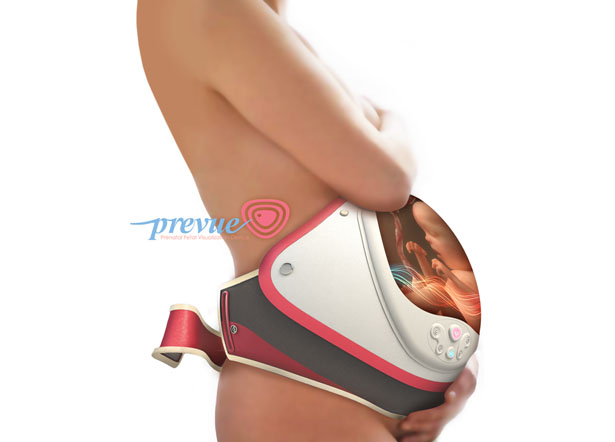
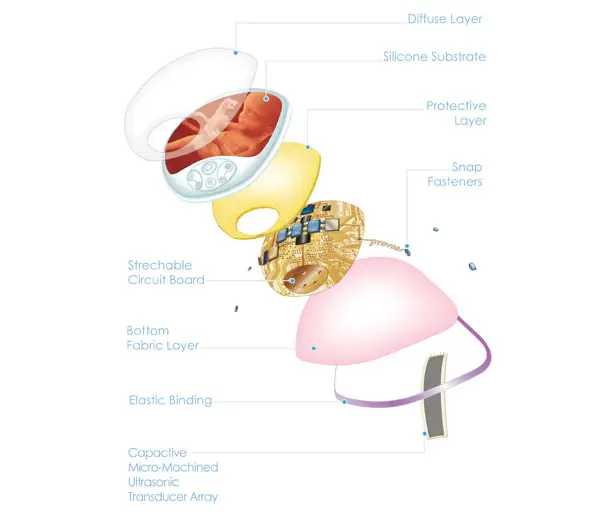
PreVue Fetal Visualization Device

I came across this today and am very excited by it. Certainly no one can now deny the humanity of the baby in the womb. What a beautiful invention.

PreVue Fetal Visualization Device by Melody Shiue | Industrial Design and Future Technology – Tuvie

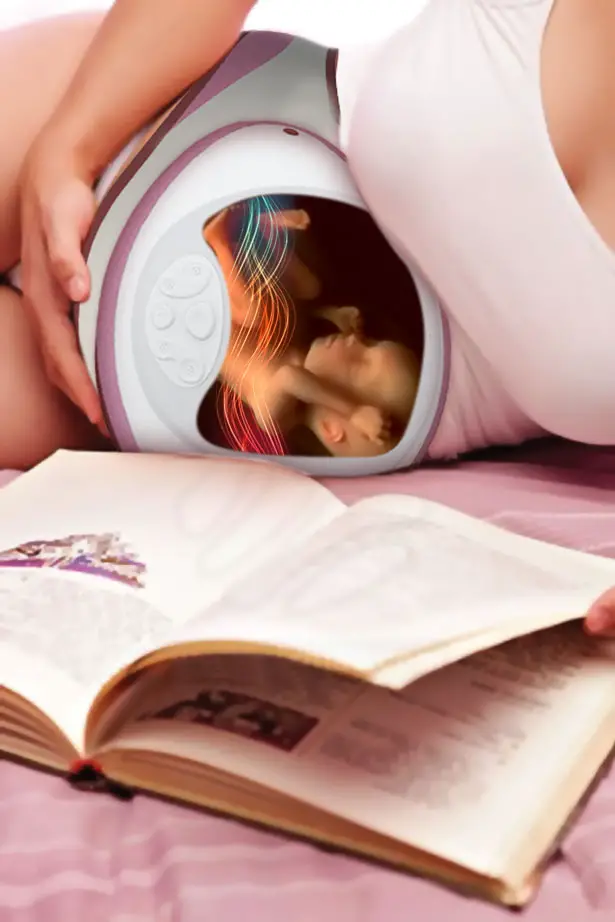
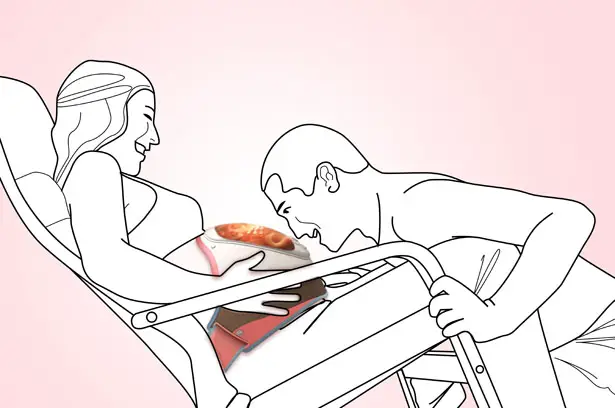
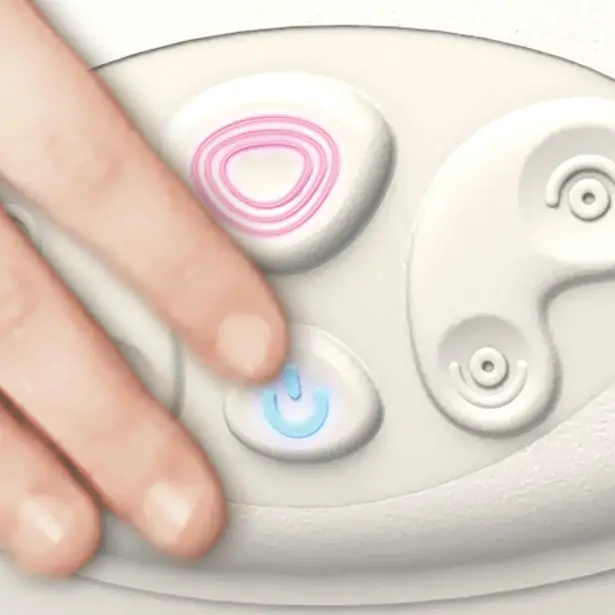
Melody Shiue, an industrial designer of the University of New South Wales has designed a product called, PreVue. It is an e-textile based device that employs latest stretchable display technology over the abdominal region, letting other family members to connect with the fetus in its context. Not only PreVue gives you the chance for interacting and watching the baby’s growth inside, it as well serves as a tool to understand the personality of the baby. You can see the baby rolling, snoozing, yawning and smiling, bringing you closer until the day it finally lies into your arms.
Designer : Melody Shiue
PreVue 4D Ultrasound

The product represents design excellence and certainly deserves an Australian Design Award as it paves way for fetal-maternal bonding in order to keep the mothers in an optimistic state of mind. Establishing early bonding essentially sustains the maternal relationship post-birth and helps delivering a healthy child. The father also gets an opportunity to watch the current activity of his child and participate in the process of bonding. The fetus will be able to recognize the mother’s voice by the 18th week. Studies reveal that when mothers sing a specific song throughout pregnancy, they can use the same tune to appease a crying baby. This means, adaptive learning starts effectively in uterus, so mothers can stimulate a mild extent of education to the fetus via music and gently tapping over the belly and watch the responsive expressions as well as reflexes of the fetus through a contextual screen.
PreVue 4D Ultrasound

Friday, 18 March 2011

Lent Reflection: The Temptations of Christ in the Desert (Part 4)

The Third Temptation

When scripture is quoted and the text is not provided, please look to the bottom of the reflection for the text of the scripture.

Let us once again look at the text from the Gospel according to Matthew.

Mat 4:1-11 

(1) The Holy Spirit led Jesus into the desert, so that the devil could test him. (2)  After Jesus had gone without eating for forty days and nights, he was very hungry. (3)  Then the devil came to him and said, "If you are God's Son, tell these stones to turn into bread.” (4)  Jesus answered, "The Scriptures say: 'No one can live only on food. People need every word that God has spoken.' " 

(5)  Next, the devil took Jesus to the holy city and had him stand on the highest part of the temple. (6)  The devil said, "If you are God's Son, jump off. The Scriptures say: 'God will give his angels orders about you. They will catch you in their arms, and you won't hurt your feet on the stones.' "  (7)  Jesus answered, "The Scriptures also say, 'Don't try to test the Lord your God!' " 

(8)  Finally, the devil took Jesus up on a very high mountain and showed him all the kingdoms on earth and their power. (9)  The devil said to him, "I will give all this to you, if you will bow down and worship me.” (10)  Jesus answered, "Go away Satan! The Scriptures say: 'Worship the Lord your God and serve only him.' "  (11)  Then the devil left Jesus, and angels came to help him.


The third temptation is the climax of this whole episode. When reading Holy Scripture we most always strive to keep the fullness of its Truth in mind. This is the only way to understand the truth.

In this temptation, Satan offers Christ all the physical power the world can offer. The catch is that Jesus must bow before the Devil. This is asking Jesus to forsake his mission, to give up God.

Is this not a small price to pay for such great influence? Could Jesus not, for just that moment, deny God? After all, if he had such worldly influence, then he would be able to convert the whole world to his message of Love. Seems like a very human response.

However, as we have seen from the other temptations, this view is totally incompatible with belief. It represents a belief in the world, not in God. It presupposes that the physical is more important than the spiritual. By its very nature, the decision to relegate God to come later is a rejection of God. This rejection precludes the ability to experience God. The mindset is incompatible with true belief.

The people are tempted in the same way later in the Gospels. This time the people must choose: Worldly power or God's Kingdom. We must look to the readings from Palm Sunday. At the trial of Jesus Christ, Pilate offers the crowd a choice between Jesus, called the Christ and Jesus Barabbas.

We need to delve deeper into this choice offered to the people. In the Gospel of Matthew, we read, “At that time a well-known terrorist named Jesus Barabbas was in jail. (Mat 27:16).” We know from the context of the term used to describe Barabbas (here translated as terrorist) that Barabbas had been involved in an uprising against the ruling Romans. He was a “freedom fighter”. The form of his name also suggests he was the ruler of the group of insurgents (we recall Bar-Kokhba who was head of the Jewish force in the last great Jewish messianic war in 132AD). Jesus Barabbas therefore presents a Messianic figure: A political Messiah. The type of Messiah the Jews were expecting. One who would bring physical power.

The name Barabbas can be broken down to Bar-Abbas. This translates as “son of the father”. Ring a bell? We see in this story the clear choice between a political messiah who promises worldly power and a messiah who offers only a message of Love. The two characters juxtapose each other in all respects, but both claim the messiahship. Moreover, the people, offered the same choice as Jesus was in the Third temptation, choose worldly power. This choice is the human decision. This decision does not look to the Kingdom of God. We know that they chose wrongly. Are we too going to choose the wrong Kingdom to pursue? Do we answer as Christ did, or do we side with the crowd screaming, “We want Barabbas?” we want this world’s power.

Which "Son of the Father" do you choose?

THE END

Post script:
I would just like to discuss the “Kingdom of God” as used in the Gospels. The word used for “Kingdom” is not a noun. It is a verb! The Hebrew word is malkut; it means the active lordship of the king. We can say then that the Kingdom of God does not lie after death, but exists on earth when we allow Gods will to rule our lives.

Most popular